
Featured
2026年2月10日
From Illuminating Companionship to Intelligent Safeguarding: A Century of Evolution
As night falls, the flowing lights of vehicles on the road shine like a glittering starry sky, illuminating the path ahead while simultaneously forming a safety barrier for traffic. As an indispensabl
As night falls, the flowing lights of vehicles on the road shine like a glittering starry sky, illuminating the path ahead while simultaneously forming a safety barrier for traffic. As an indispensable core component of automobiles, headlights serve not only as the ‘eyes’ that light the way forward, but also as vital conveyors of driving intent and expressions of a vehicle's character. From the faint glow of kerosene lamps in their earliest form to today's precise, intelligent laser beams, automotive lighting has undergone a century of evolution. It bears witness to technological innovation within the automotive industry while embodying humanity's relentless pursuit of safety and aesthetic excellence.
I. A Century of Evolution: From Open Flames to Intelligent Illumination
The rudimentary form of automotive headlights emerged during the late 19th-century era of horse-drawn carriages. When the Mercedes-Benz 1 was unveiled in 1886, no dedicated lighting system existed. Drivers relied on handheld kerosene lamps or candles for night-time journeys, their feeble glow illuminating merely a few metres ahead – rendering safety a distant concern. This predicament was resolved with the dawn of electrical technology. By 1900, Edison's incandescent bulb found application in automobiles, giving rise to the first electric vehicle lamp. Though limited in brightness and short-lived, it eliminated the safety hazards of open flames, ushering in the electrification era of automotive lighting.
The mid-20th century witnessed the advent of halogen lamps, ushering in an era of mass-produced automotive lighting. By 1960, European manufacturers pioneered the use of halogen bulbs for headlights. By filling the bulb with halogen gases like iodine and bromine, these lamps enabled the recycling of tungsten filaments. This innovation not only extended filament lifespan but also boosted brightness by over 30% compared to traditional incandescent bulbs. Halogen lamps, with their simple structure and low cost, swiftly became the global automotive standard, accompanying countless motorists through over half a century of night-time journeys. Concurrently, functional lamps such as indicators and brake lights gradually became standardised, forming a comprehensive lighting system that provided the technological foundation for the establishment of traffic regulations.
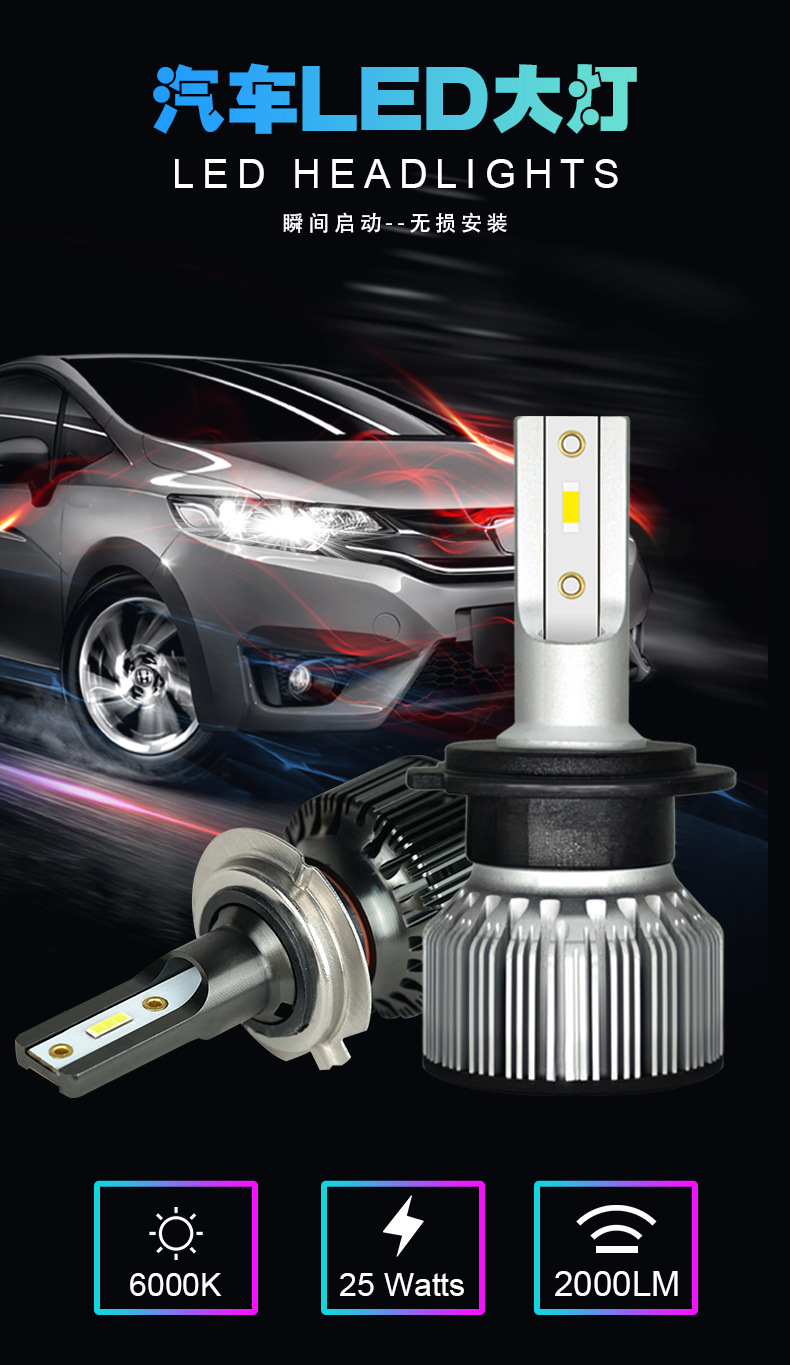
Entering the 21st century, the explosive growth of LED technology enabled automotive lighting to achieve a qualitative leap. Light-emitting diodes (LEDs) offer advantages such as low energy consumption, extended lifespan, and rapid response times. Their brightness can reach three times that of halogen lamps while consuming merely one-tenth of the energy. In 2007, the Audi R8 became the first production vehicle to feature full LED headlights. Its distinctive ‘teardrop’ design not only revolutionised the aesthetics of traditional lighting but also enabled intelligent adaptive control. This system automatically switches between high and low beams based on speed and road conditions, preventing glare for oncoming drivers. Today, LED lighting has become ubiquitous, standard across everything from family saloons to luxury sports cars. Premium models further incorporate matrix LED technology, enabling individual control of each light diode. This delivers precise road illumination while creating highly distinctive lighting aesthetics.
Currently, the advent of laser headlights is elevating automotive illumination to new heights. Laser light sources deliver tenfold brightness compared to LEDs, projecting over 600 metres with concentrated beams and reduced energy consumption. In 2014, the BMW i8 became the first production vehicle to feature laser headlights, employing blue laser diodes combined with phosphors to produce a soft white light that ensures effective illumination while aligning with human visual perception. Even more astonishing is the deep integration of intelligent driving technology with automotive lighting. Through sensors such as cameras and radar, headlights can identify pedestrians and vehicles in real time, automatically adjusting illumination range and brightness. Coupled with in-car navigation, this enables an intelligent ‘lighting follows the road’ experience, making illumination more proactive and safer.